|
Friends,
Before we get to this week, a quick note. The last twenty editions of The Competitive Edge now live in one place, in the newsletter archive. If you’re new here, or you’ve been meaning to go back for one you missed, that’s the place to start. If you’re after something older than that, write to me and I’ll dig it out.
Trust inside a team rarely breaks all at once, and it isn’t always broken by anyone in the building. More often it gets worn down from the outside, by a story in the press, a rumor that travels faster than the facts, or a controversy that has nothing to do with your program but lands on your people all the same. When that happens, the instinct of most leaders is to get more careful and say less. Mine was no different.
· · ·
In 2020 I was a few months into command of a brigade combat team at Fort Hood, Texas. It was a hard year to be a Soldier there, for reasons that were covered at length at the time and that I’ll save for another day. What matters for this story is that the news and social media were full of it, much of it negative and a good deal of it wrong, and all of it was reaching our Soldiers faster than we were.
Major General Jeffery Broadwater, who commanded the 1st Cavalry Division, gave his brigade commanders a simple direction: go talk to every company in your formation. For a brigade combat team, that meant thirty-seven companies, at an hour or more each, on top of everything else we were carrying. COVID rules had already taken large formations off the table, so there was no shortcut. It took me about two weeks.
His intent was clear enough. Tell the Soldiers what we knew, calm the uncertainty, and push back on the misinformation. I added one thing of my own, which was that I would be as transparent as I possibly could. I was still new, and most of those Soldiers had never had the chance to meet me in person.
My first reaction was about the time it would take. My second was doubt. I wasn’t going to question the direction, but I didn’t know whether it would do any good.
· · ·
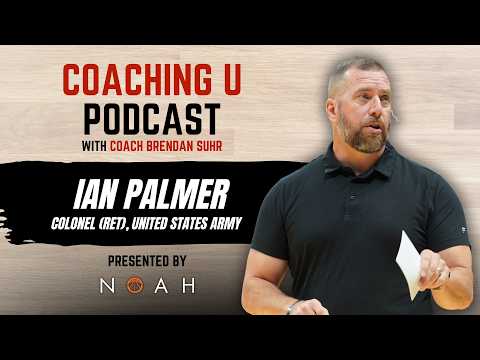
If you’d like to hear more about my time in uniform and what it taught me about leading teams, I joined the Coaching U Podcast for Episode 340 to talk about the leadership lessons I carried out of twenty-six years in the Army and what they mean for the people coaching teams today.
On video
· · ·
It did, and in more ways than I expected. In the room, I could feel the temperature come down. A lot of our Soldiers were misinformed, some were simply uninformed, and some were emotional about what was happening around them. Telling them plainly what I knew, what I didn’t know, and what I was working on settled a good deal of that almost immediately.
What surprised me was how much I learned. They were hearing me, but I was hearing them just as much, and across thirty-seven conversations the trends and themes of the entire brigade came into focus in a way no report had ever given me.
Some of what I heard was easy to fix. The gyms had been closed for COVID, and it didn’t take long to figure out how badly the Soldiers wanted them back. We were acquiring some deployable gym equipment, and we got it into their hands. Working out outside wasn’t ideal, but it bridged the gap until the gyms reopened, and it showed them that what they said in that room went somewhere.
Other things took months. I kept track of every issue raised and every one left unresolved, and I kept track of who had raised it. When we finally had an answer, we went back to that Soldier or that unit and told them. When we didn’t have one yet, I went back and said so, and in a few cases I told them I didn’t think I would ever get one. The response to that follow-up, even when it came months later, was as strong as anything we did that year.
· · ·
Rebuilding trust was never the stated objective. The purpose was damage control and a chance to hear from the Soldiers. Trust is what came out of it anyway, because of what those conversations told them. We weren’t afraid to stand in front of them and take their questions. We told them the truth, including the parts we didn’t know. We listened, we acted, and we came back. None of it fixed everything, and there was a great deal of negativity still out there that took a long time to work through, but it gave us a foundation to build on.
· · ·
On the blog this week, Different Arenas. Same Demands. Elite Army units and championship teams win for the same reasons, and in both arenas it starts with culture. The piece lays out what that looks like on the battlefield and in the locker room.
From the blog

· · ·
When I look back at why it worked, it comes down to three questions every team is quietly asking its leader, whether anyone ever says them out loud or not.
Do you know what you’re doing? They didn’t need a briefing from me to answer that one. They needed to see the things they raised get done. Sometimes that meant gym equipment in their hands within weeks, and sometimes it meant pressing people outside the brigade on problems we hadn’t known existed. Each one they saw fixed told them more about whether their commander could get results than anything I said in the room.
Do you care about me? Thirty-seven hours in two weeks, during the most demanding stretch of my command, was a cost they could see. Care that costs you nothing doesn’t register with people. Care that costs you time does.
Will you do what you said? This was the one that mattered most, and it was answered months later, one follow-up at a time. Every Soldier who heard back about something he had raised, even when the answer was no, learned that my word meant something.
Coaches are living their own version of this right now, whether it comes from the portal, from NIL, from a bad loss that becomes a story before you can respond, or from a rumor that reaches your locker room before it reaches you. You can’t control what’s being said outside the building. You can control whether your players hear the truth from you first, in a room small enough for them to ask you anything.
· · ·
One thing to do this week. Think about what is wearing on trust in your program from the outside right now. Then sit down with your people in groups small enough that everyone can talk, and tell them what you know and what you don’t. Write down what they tell you and who told you. Then go back to every one of them, even if the only answer you have is that you’re still working on it.
I’ve thought about Major General Broadwater’s direction many times since. At the time it felt like one more requirement on an already full plate, and I wasn’t sure it would work. He saw what the moment called for, trusted his commanders to carry it out in their own way, and gave us the chance to do something none of us would have made time for on our own. I’m grateful to him for that. Those two weeks shaped how I’ve thought about trust ever since.
· · ·
If you know a coach or a leader who is dealing with noise from outside the building right now, forward this to them. And if someone passed it along to you, you can subscribe at ianpalmerleadership.com/newsletter. |